

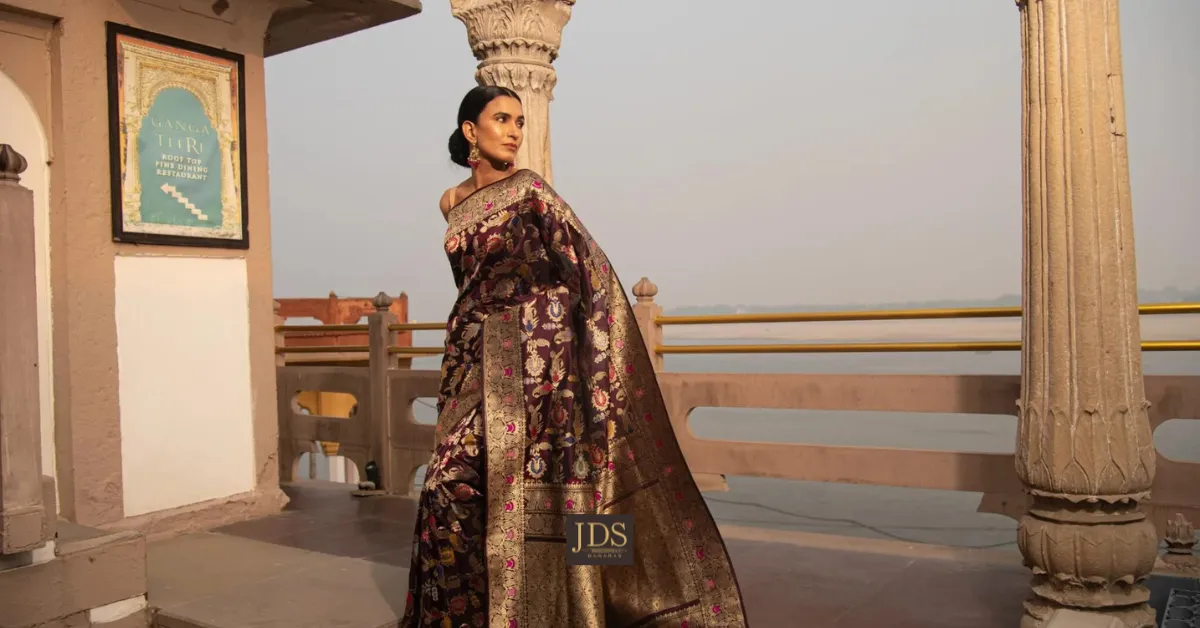
In the streets of an ancient city, fabric is memory, and skill is identity. The notion of being a saree manufacturer in Varanasi is one of patience, discipline, and reverence. This is not achieved in short periods of time. This involves lived experiences, traditions, and utmost concern for detail. What truly sets these people apart is not their quantity or how quickly they achieve their goals, but their level of quality and cultural sensitivity.
- Deep Cultural Grounding: A robust manufacturer is built with the rhythm and rituals of the city. The effect of the city, like Varanasi, can always be felt in the texture, design, and tone of the fabric. The reason behind this lies in the fact that every fabric, like the saree, always stands in its space and purpose. This has come out of the fact that the fabric had to display and cultivate a strong relation with the belief system of its people, as well as its aesthetic sense without losing its originality.
- Generational Skill Transfer: What makes the persistent makers different from the transient ones is the knowledge that has been passed down but never discarded. There is learning of the craft observed, corrected, and perfected with the passage of decades. No shortcuts have been taken with the loom work, yarn tension, and the balance of the motif. This ensures that precision occurs naturally in the final weave, making the craft feel balanced and sure in every detail.
- Respect for Handloom Discipline: Real distinction comes from treating the limitations and advantages of the handloom properly. Knowledgeable manufacturers will not attempt to rush processes designed to be taken slowly. They will allow adequate time for setting, testing, and correcting. Their respect for this process ensures that errors are avoided and structural integrity is maintained. The saree will be one that keeps its shape over time.
- Material Selection Awareness: Professional manufacturers know their materials. The quality of silk, the size of zari, and the nature of the threads are assessed before finally starting to weave. Such understanding ensures that the fabric does not remain beautiful but lacking strength. While the fabric feels luxurious, it also looks refined due to repeated use.
- Design Restraint and Balance: Standing out does not have anything to do with being excessive. There is also a sense of balance, with a certain amount of space provided to breathe. The borders support but do not dominate the main body of the saree. All these elements provide elegance in restraint, not loudness. Reasonable balance ensures the saree is appropriate for a range of occasions without losing its overall identity.
- Process Transparency: Trust builds when there is clarity of process. Good makers have a clear understanding of how fabric is woven, how long it takes, and what is possible. They are not unrealistic with their promises and realistically appreciate the pace of the craft. Buyers understand what they get and why it is important; a deeper value is appreciated beyond the beauty of the fabric.
- Adaptation Without Dilution: Change is accepted, though not blindly followed. These manufacturers who stand out are seen to make careful changes in designs. Careful observations are made of modern changes in preferences while still keeping the integrity of traditional structures intact. Therefore, the changes are such that the tradition is kept alive without compromising or diluting its integrity.
- Artisan Centric: Manufacturing strength comes from the people involved. Trained craftspeople care about artisan comfort. If the craftspeople are respected as individuals, their crafts reflect that. This approach makes for more consistent results and fewer errors. The fabric has a soothing approach rather than a stressful one. The completed piece is down-to-earth and honest.
- Consistency Over Volume: Being different sometimes means producing less, not more. Satisfied manufacturers focus on quality, not quantity. A saree gets the same attention irrespective of how many are ordered. This is how manufacturers build their reputation, slowly but surely. Customers patronise them not in search of different things, but in search of quality-assured goods they can use repeatedly.
- Local Sourcing and Regional Knowledge: A remarkable manufacturer recognises the importance of procuring from near home. Yarns, zari, and other supporting materials are procured considering local climate and weaving styles. This approach minimises texture and material inconsistency while weaving the saree. Understanding the nearby suppliers ensures the saree maintains regular quality without any surprise or mismatch pertaining to texture or colour.
- Time Discipline in Craft Execution: Time becomes a tool rather than a pressure point. Skilled manufacturers understand that a schedule has to be developed properly while taking into consideration the machine as well as human limitations. In an attempt to rush through the manufacturing process, the fabric becomes distorted, and stitching becomes weak. Well-employed time management enables the proper settling of the design, making the completed products look stable, classy, and finished rather than hurried.
In conclusion, what really makes a saree manufacturer in Varanasi is not visibility, but the values such as skills, patience, honesty, and respect for tradition. When all these are present, a saree is not just a piece of clothing, but also a cultural statement that is a result of time. This is exactly the reason a saree manufacturer remains distinguished.
JDS Banaras: 113 Years of Trust in Authentic Banarasi Sarees
For over a century, JDS Banaras has been a symbol of trust, tradition, and excellence in the world of Banarasi sarees. With 113 years of experience, the brand continues to uphold the finest standards of craftsmanship by offering premium silk sarees woven by skilled artisans. Situated at D, 58/1, Rathyatra Kamachha Road, Rathyatra Crossing, Jahumandi, Varanasi, JDS Banaras invites saree lovers to discover and purchase authentic collections that celebrate India’s rich textile legacy.
